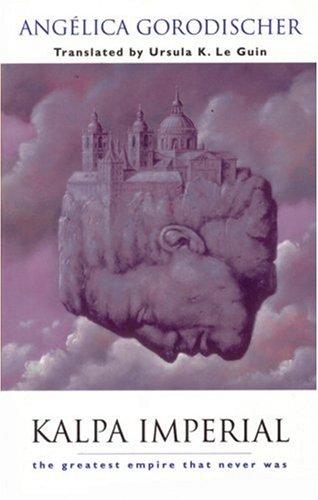

el dang reseñó Kalpa imperial de Angélica Gorodischer
starts strong, ultimately meanders too much for me
I enjoyed reading most of this book, but as I went on from one story to the next I noticed I was taking longer and longer breaks between the stories. In the end I stopped a couple short of the end just because I was about to head out on a trip and I realised I wasn't finding it compelling enough to bring the physical book with me. I'll probably read them eventually, but I'm not in a hurry so I'm just considering this shelved for now.
The basic premise is that all the stories are pieces of the history of what appears to be one empire which has waxed and waned in size and power over a very long time, possibly millennia. But I'm not quite sure if I have that right, because the stories are generally not connected to each other - I think I caught one …
I enjoyed reading most of this book, but as I went on from one story to the next I noticed I was taking longer and longer breaks between the stories. In the end I stopped a couple short of the end just because I was about to head out on a trip and I realised I wasn't finding it compelling enough to bring the physical book with me. I'll probably read them eventually, but I'm not in a hurry so I'm just considering this shelved for now.
The basic premise is that all the stories are pieces of the history of what appears to be one empire which has waxed and waned in size and power over a very long time, possibly millennia. But I'm not quite sure if I have that right, because the stories are generally not connected to each other - I think I caught one ruling dynasty's name getting repeated but that's the only explicit link I've picked up so far. Which I don't necessarily mind in itself--after all I've enjoyed plenty of collections of totally unconnected short stories--but it seems to have constrained the author just enough for the stories to start to feel samey even though they're about clearly different eras and take a variety of narrative points of view.
I noticed somewhere that this book was originally published in Spanish as two separate volumes. I might have enjoyed it more if I'd read one volume and then set it aside for a while as I tend to do with successive instalments of a series. The repetitiveness didn't really start to bother me until some way into the second volume.